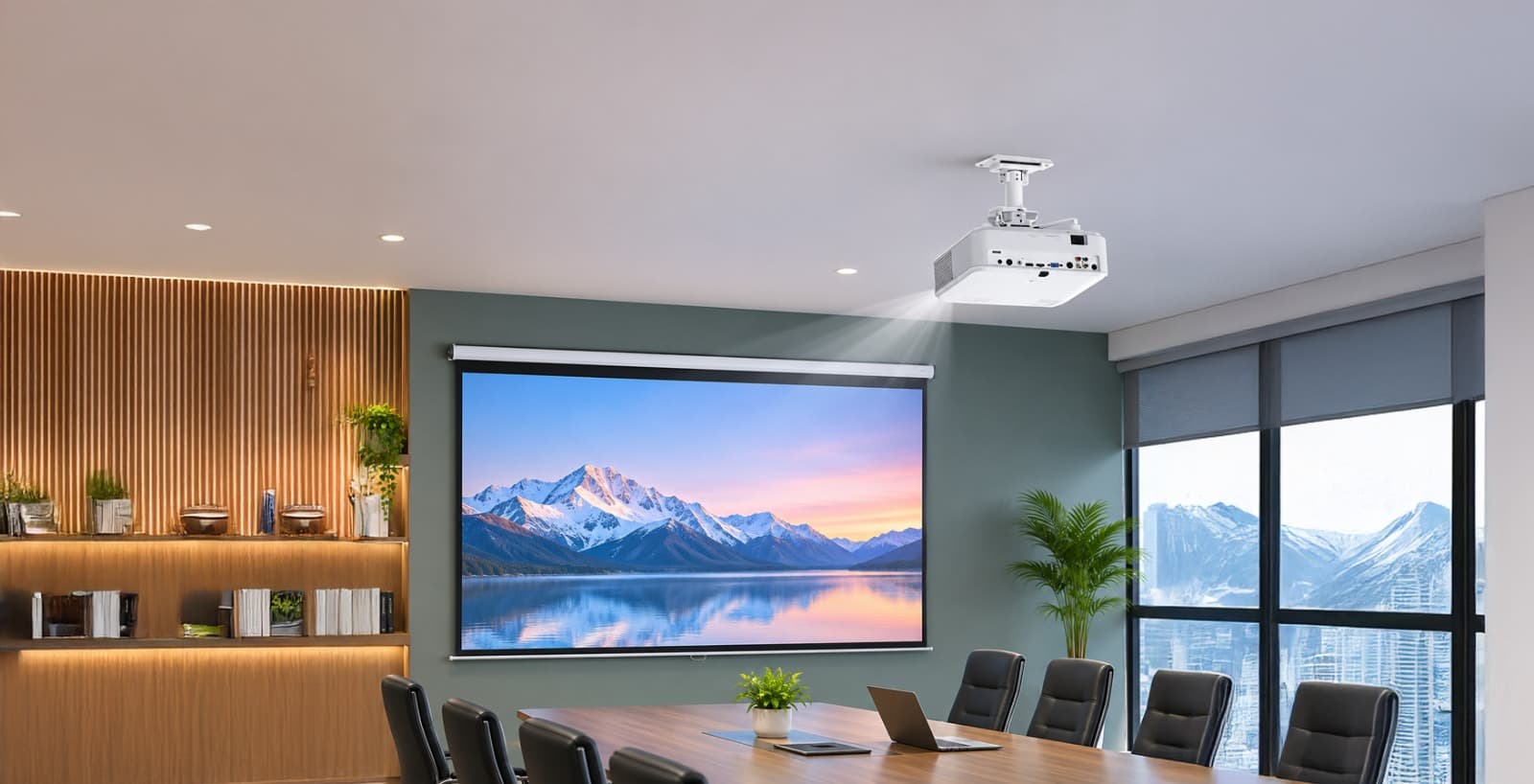
Manual vs Motorized Projector Screens: Which Should You Choose?
A manual projector screen suits a home setup where you can comfortably reach the screen and operate it by hand, while a motorized projector screen offers powered deployment and retraction when electrical access and installation conditions are suitable. When comparing manual vs motorized projector screens, start with how often you will use the screen and where its housing will be mounted. In a multipurpose living room, a retractable screen can be stored above the viewing area between sessions. Check that the lowered screen clears furniture, shelving and any television positioned behind it. A manual model requires convenient access to its operating handle and enough space to follow the manufacturer’s opening and retraction procedure. A motorized model requires a suitable power connection and access to the supplied controls. Confirm which control accessories are included with the exact model, and check any requirements for connecting it to a projector trigger or home automation system before purchasing. Screen size and aspect ratio should be selected separately from the operating mechanism. Measure the available wall width, housing clearance, ceiling height and usable viewing area, then check the projector’s throw-distance guidance for the image size you want. A screen that fits the wall may still be unsuitable if the projector cannot produce the required image from its planned position. For predominantly widescreen films, streaming and gaming, consider a 16:9 screen that matches the intended content and projector settings. Skill Tech lists the SH ESBA120 as a 120-inch, 16:9 Auto-Lock Manual Projection Screen, with a matte white surface and wall or ceiling mounting options. Its motorized projector screen range also lists the SH ESAA120 as a 120-inch, 16:9 Electric Projection Screen. These models provide manual and powered options within the same advertised size and aspect ratio, although their housing dimensions, installation requirements and included accessories must be checked individually. Consider the room’s lighting as well. Choosing powered operation alone does not establish how the projected image will look in daylight. Screen material, projector output, ambient light and placement all influence the result, so confirm compatibility with the projector, particularly for short-throw or ultra-short-throw installations. Before fixing either screen, have the mounting surface and suitable attachment method assessed, especially where a suspended ceiling or decorative panel conceals the supporting structure. Keep the housing and any required service points accessible. For an electric screen, arrange the power connection according to the supplied instructions and use a qualified electrician where electrical work is required. If you plan to use the screen occasionally and can easily reach it, a manual model may meet your operating needs. If the housing will be difficult to reach or you want powered operation for regular viewing, review the motorized option alongside its power and control requirements. Contact Skill Tech with your room dimensions, projector model, intended screen position and preferred operation to enquire about suitable projector screens for your home.
Recent Posts
How to Choose Monitor Arms for Office Desks
November 12, 2026
Can You Replace Missing TV Feet with a Tabletop Stand?
November 12, 2026
Will a Full-Motion TV Mount Fit in a Recessed Wall?
October 27, 2026
TV Trolley Selection for Shared Meeting Rooms in the UAE
October 27, 2026